Here is something I have never said out loud quite this directly.
For a long time, I thought epilepsy was something that happened to me.
It took me decades to understand that epilepsy was something that happened for me.
I am not saying that to be inspirational. I am saying it because it is the honest truth of what fifty years of living with this condition has taught me. And I think you deserve the honest truth — not the polished version — if you are going to spend time reading my story.
So here it is. From the beginning.
The Night Everything Changed
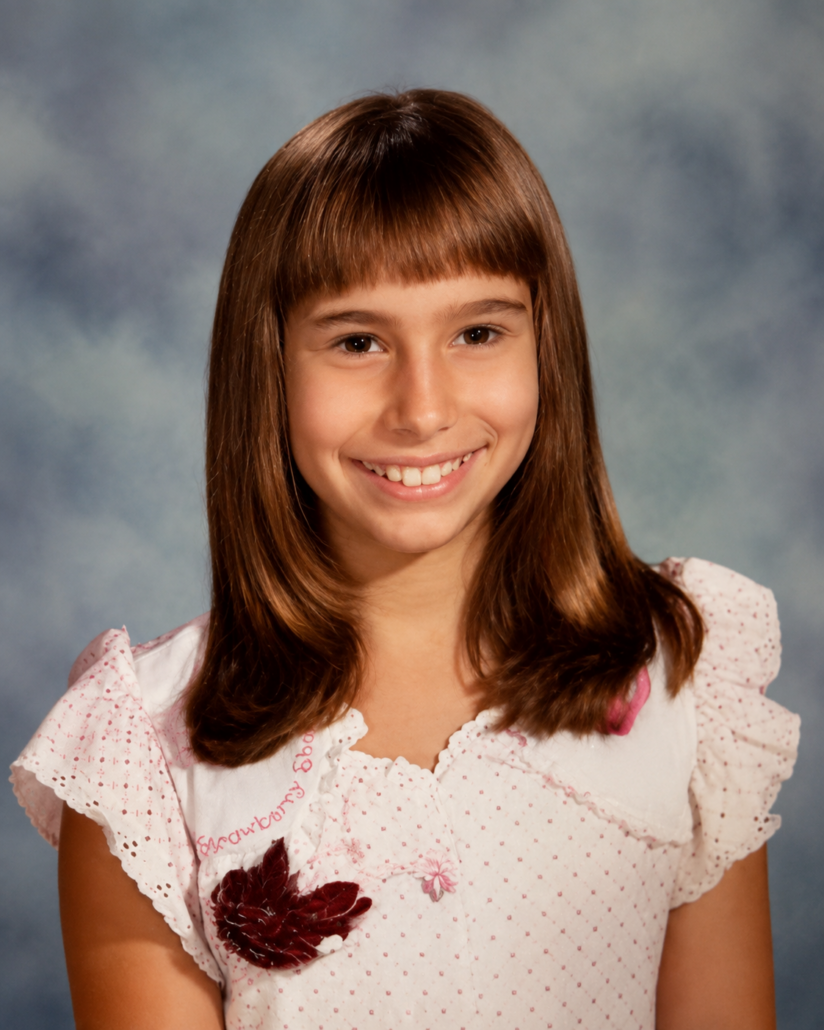
I was five years old.
It started with an ear infection. The ordinary kind that millions of children get every year. My mother took me to the doctor. The doctor prescribed penicillin and rest. We went home.
On the tenth night of taking the medication, my mother noticed my lips looked different. Redder than usual. She felt uneasy but went to bed.
The next morning she woke to sounds coming from my room that she could not explain. She ran in and found me turning blue. My eyes had rolled to the left. My entire body was convulsing. My teeth were chattering. Foam was coming from my mouth. I was not getting enough oxygen.
She called an ambulance.
At the hospital, the doctors ran every test they had. What they found was encephalitis — a virus that had traveled from the bacteria in my ear infection directly to my brain. It had settled there. And it was doing damage.
I was induced into a coma.
For four days I did not wake up.
The doctors told my parents the projections were grim. If I survived, I would most likely be paraplegic. Or I would have severe brain damage. Or both.
My father — a man of deep and unshakeable faith — stood at my bedside and prayed to a saint in Greece. He visualized the statue outside his old church. A statue that people said had been seen to shed tears.
When he opened his eyes, he saw a teardrop rolling down my face.
And I woke up.
The doctors had no explanation for it.
They told my mother it was a miracle.
The tests came back. No significant brain damage. No detectable scar tissue either — not then and not in all the years of testing that followed.
The doctors believed the virus had scattered microscopic damage throughout my brain as it traveled — pieces too small to show up on any scan. An assumption. A theory. Nothing they could ever prove.
What they could prove was this — I had epilepsy. And I would have it for the rest of my life.
What Nobody Tells You About Growing Up With Epilepsy
Here is what I want you to understand about what followed.
It was not one dramatic moment. It was thousands of ordinary moments made harder than they needed to be.
It was being put on the side of the gym in school because my teachers did not know what to do with me. It was medication after medication — some that blurred my vision, some that flattened my emotions, some that slowed my speech so severely that I could hear every word forming perfectly in my mind but could not get my mouth to produce them correctly. I sounded like someone who had been drinking. I knew it. I had no control over it.
It was the process of changing medications — which you cannot do quickly — which meant existing somewhere between two chemical realities for months at a time, feeling the side effects of both.
It was finally getting my driver’s license at eighteen and feeling like the whole world had opened up. It was losing it again when I had a seizure in the car — my boyfriend grabbing the wheel — and having that freedom taken back.
It was the fifteen years that followed without driving.
Fifteen years of depending on other people’s schedules for everything. Fifteen years of watching the independence I had fought so hard for sit just out of reach. Fifteen years of a particular kind of loneliness that is hard to explain to someone who has never experienced it — the loneliness of needing help with things that other people do not even think about.
My confidence dropped. My self-esteem dropped. Depression moved in. And I let the outside world recede.
I want to tell you that because I think it is important.
Not because I want your sympathy. But because I think if you have ever felt that way — if you have ever felt like life was happening to you instead of for you and you did not know how to turn it around — I want you to know that I understand it from the inside.
The Moments That Turned It
There were several. I will tell you the most important ones.
The first was something I did during college.
College was on my bucket list. It had always been there. But epilepsy made me wonder if I would ever be able to finish.
The late nights studying. The stress of exams. The pressure of grades. All of it sent my seizures through the roof. I was fighting on two fronts at the same time — trying to get an education and trying to keep my own body from betraying me in the middle of it.
I was not sure I was going to make it through.
So I did something that surprised even me.
I wrote a letter to the Epilepsy Foundation in Washington, DC, and asked them to publish an article asking others how they coped with epilepsy. How they managed. How they kept going when their body was working against them.
The letters that came back changed everything.
They came from people of all ages — from across the United States and Canada. Hundreds of them. From people at every stage of life who had felt exactly what I was feeling and had never found anyone willing to ask the question out loud.
For the first time in my life, I did not feel alone.
I took everything those letters taught me — their advice, their inspiration, their hard-won wisdom — and I built a regimen for myself. A way of living with epilepsy that nobody had handed me. That I had to piece together from strangers who understood.
That regimen got me through college.
Then in one particular college class I suffered a seizure, collapsing to the floor amidst a sea of silence. My classmates stared. And then my professor — quietly and without making it a bigger moment than it needed to be — asked if I was okay and said that his former roommate had lived a full life with epilepsy too.
That was all he said.
But in that moment the atmosphere shifted. And something in me shifted with it.
The Second Moment — The Office Floor
I was working at a corporation. I felt the aura coming and did not make it to safety in time. I went straight down in a hallway. An executive walked past. He looked down at me lying on the floor. And he stepped over me and kept walking.
Thirty minutes later, his assistant came to tell me my services were no longer needed.
I walked out of that building with my head up. I did not know where I was going. But I kept repeating something to myself.
One day I will be a success.
What I Did With It
Years passed. I got married. Life kept moving forward.
And somewhere in the middle of all of it, I had slowly been writing a book.
My husband had been watching me chip away at it for years. One day he looked at me and said — would you please just finish that book already?
So I did.
I took everything — the letters from people of all ages, the regimen I had built, the years of living inside this condition — and I wrote Epilepsy You Are Not Alone — From a Patient Perspective.
Shortly after it was published, I received an email.
When I opened it, the person said they had found my book in Barnes & Noble. And they needed me to know something.
They had been on the verge of suicide.
My book had saved their life.
I sat with that email for a long time.
Because in that moment I understood something I had not fully understood before.
This was never just my story.
It was always meant for someone else.
And that changed everything about how I moved forward.
I wrote twenty books in total.
I stood before the United States Congress and testified on job discrimination against people with epilepsy. Congressman Rush Holt sat across from me, and tears came to his eyes. He told me his sister had grown up with epilepsy. That my words had brought back a lot of memories.
I became a featured spokesperson for Sunovion Pharmaceuticals. I served as a HOPE mentor for the Epilepsy Foundation for sixteen years. I co-authored health content with neurologist Dr. Orrin Devinsky, M.D., in Brain and Life Magazine — the official publication of the American Academy of Neurology.
After fifteen long years, epilepsy finally loosened its grip on my driving privileges. My seizures became controlled. I got back behind the wheel. And I kept building.
I built a podcast — The Advisor with Stacey Chillemi — that now reaches 1.3 million listeners worldwide and is ranked in the top 0.5% of all podcasts globally. It won the NYC Podcast Award for Best Host.
And eventually I built Advisor Global Media — a full-service media and PR agency — because I knew from the inside what it felt like to have something important to say and no platform to say it from. And I did not want that to be anyone else’s story if I could help it.
The Team That Makes It Possible
I do not do this alone.
Erin Saxton is a multi-Emmy-nominated TV producer with over 20 years behind the scenes at The View, Barbara Walters Specials, and Good Morning America. She transforms your story into something producers and journalists actually want to cover.
Chad Lefevre is a global business strategist who has helped more than 30,000 leaders clarify their message and expand their influence, working with Coca-Cola, Sony Music, and Shell.
Michael Drew is one of the top book promoters in the United States who has guided authors to bestseller lists and teaches experts exactly how to write and launch a book that becomes a national bestseller.
And behind every episode, every article, and every campaign is a dedicated production team that makes it all run. Lisa Urbanski brings warmth and expertise to every client relationship as our podcast host and business development lead. Shannon, our Marketing Director, handles overall marketing strategy, platform management, and brand positioning, ensuring our agency shows up professionally across every channel. Lauren oversees video production and distribution. Rosette manages guest outreach and social media, ensuring our message reaches new audiences every single day.
Together they make sure that every piece of content we create reaches the right people at the right time.
This is not a one-person operation. It never has been. Every client who comes through our doors gets the full team — not just a name on a website.
Why Any of This Matters to You
If you found this page, it is probably because something in your life brought you to a crossroads.
Maybe you have a message that matters, and you cannot figure out how to get it in front of the people who need to hear it.
Maybe you have been building quietly for years, and you are ready for your work to reach a bigger stage.
Maybe something happened — something you did not ask for — that rerouted everything, and now you are figuring out what to build from here.
That is where most of our best clients start.
Not with a polished brand strategy. With a real story and a real message and the readiness to finally let the right people hear it.
I built something from inside the walls of limitation. I know how to help you do the same.
If you are ready — I would love to talk.